









Josef Bican, The Goalscorer The World Forgot
Josef Bican May Have Scored More Goals Than Anyone In Football History, And Almost No One Remembers Him
By Sidick Adjah · September 27, 2026 · 8 minutes read
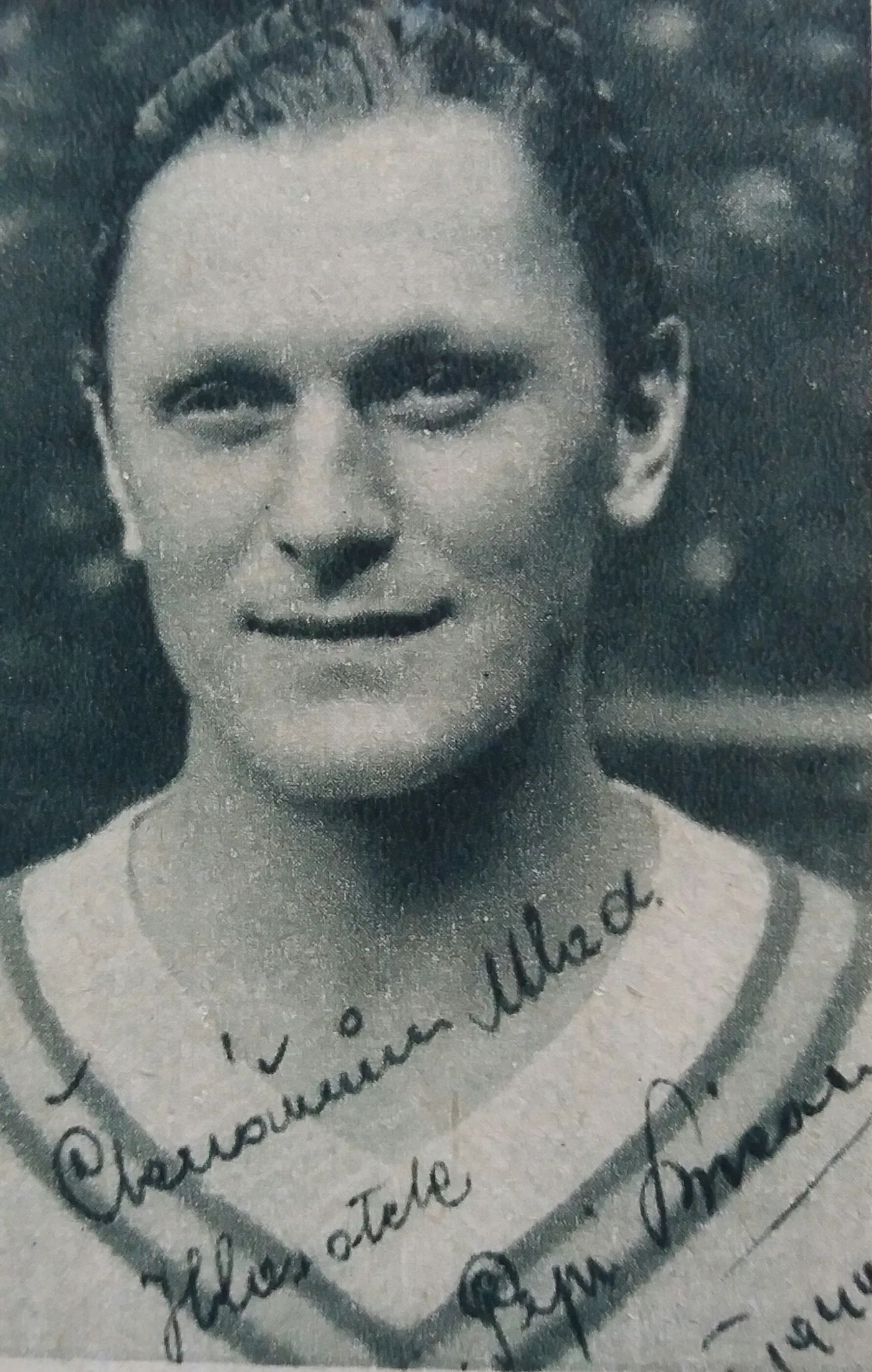
Ask a football fan to name the greatest goalscorer of all time and the answers arrive quickly: Cristiano Ronaldo. Lionel Messi. Pele. Their names sit atop record books, sponsorship deals and highlight reels watched billions of times over. Ask the same fan about Josef Bican, and most will draw a blank. Yet some historical reconstructions credit Bican with more career goals than any of the three, though the figure depends heavily on which matches get counted, and modern official-match databases produce far more conservative totals for his career. Depending on which historian you ask, and which matches you choose to count, Bican finished his career with 805 goals, 821 goals, or somewhere north of 900 or even 1,000. Nobody, including the organizations who study this for a living, agrees on the exact number. What almost everyone agrees on is that, goal for goal, no modern player comes close to matching his scoring rate. As of September 2026, Cristiano Ronaldo has scored 979 career goals in senior football and Lionel Messi 929, both at a rate of roughly 0.7 to 0.8 goals per appearance, and both totals will keep climbing as either player keeps appearing. Pele's own widely cited total of 1,281 goals in 1,363 games, a similarly disputed figure that leans on exhibition matches, works out to about 0.94 goals per game. Bican's more conservative official count, over 950 goals in 624 recognized matches, works out to roughly 1.5 goals per game, comfortably ahead of all three even before the more expansive counts that push his total past 1,000 are considered. This is the story of how a player that good disappeared from football's popular memory, and what his case says about who gets remembered by history and who does not.
A Vienna Childhood, An Austrian Prodigy Josef Bican was born in Vienna on September 25, 1913, the son of a Czech footballer who had settled in the Austrian capital. Football was less a hobby than an inheritance in the Bican household, and by his teens Josef was already drawing attention on Vienna's youth pitches for a rare combination of raw pace and clinical finishing with either foot. He made his debut for Rapid Vienna in September 1931, at just 17, and scored three goals in the first 28 minutes. It was less an introduction than an announcement. Bican spent four seasons banging in goals for Rapid before a brief spell at local rivals Admira, all while establishing himself as one of the most feared strikers in Austrian football. That reputation earned him a place in the Austrian "Wunderteam," the gifted national side of the early 1930s built around fluid, attacking football that many historians credit with helping shape the modern passing game. Bican played for Austria at the 1934 World Cup, where the Wunderteam reached the semi-finals, one of the high points of a golden era for Austrian football that the rise of fascism would soon bring to an end.
The Move To Slavia, And Total Domestic Dominance In 1937, Bican left Vienna for Slavia Prague, drawn by Czechoslovak football's growing strength and, by some accounts, a better financial offer than Austrian clubs could match. He applied for Czechoslovak citizenship, tracing it to his father's Bohemian roots, but a bureaucratic delay meant the paperwork was not finalized in time for him to represent Czechoslovakia at the 1938 World Cup, the one major tournament of his career he missed. Having already played for Austria at the 1934 World Cup, Bican now found himself unable to turn out for either country, Austria no longer fielded its own team after being absorbed into Nazi Germany, and Czechoslovakia's paperwork still hadn't cleared. It was a strange limbo for a player about to become one of the most productive goalscorers Europe had ever seen. At Slavia, Bican did not just score goals, he rewrote what a single striker was capable of doing to a league. He topped the Czechoslovak First League's scoring charts season after season through the late 1930s and into the 1940s, often by absurd margins, and helped Slavia win the Mitropa Cup, then the closest thing European club football had to a continental championship, in 1938. By the time his Slavia career wound down, he had scored 447 league goals in Czechoslovakia alone, on top of 71 more in Austria with Rapid and Admira, giving him 518 goals in top flight league football, still recognized by UEFA as the highest total ever recorded in a European top division.
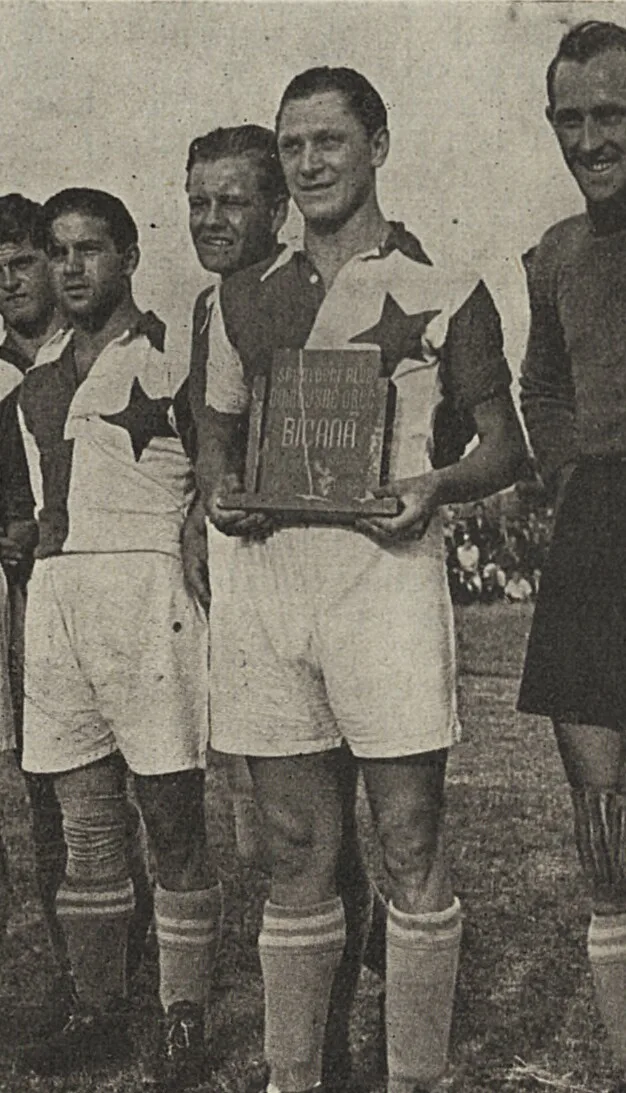
Scoring Through The Second World War Bican's prime years collided directly with the darkest period in Europe's twentieth century. After the 1938 Anschluss absorbed Austria into Nazi Germany, and Nazi Germany went on to occupy the rest of Czechoslovakia the following year, Bican refused to play for a unified "German" national team that would have included former Austrian teammates, a stance that quietly cost him further caps at the peak of his powers. Domestic football did not stop during the occupation years, and neither did Bican, who kept scoring at a startling rate in wartime league and cup competitions that history has since struggled to classify as fully "official." He also turned out for a short lived Bohemia and Moravia representative side in 1939. What never happened is just as significant as what did. The 1938 and 1942 World Cups he might have starred in were both cancelled by war, and years of his prime were spent playing in competitions cut off from the rest of Europe by occupation and conflict. Nobody can put a number on the international goals a fully available Bican might have scored between 1938 and 1945. What is clear is that the war years quietly erased a large stretch of the international stage he otherwise would have commanded.
So How Many Goals Did He Actually Score? The uncertainty around Bican's goal tally is not a footnote, it is the whole debate. The International Federation of Football History and Statistics, whose figures FIFA itself has cited, credits Bican with 805 goals in matches it classifies as official across his career. In 2022, as Cristiano Ronaldo closed in on that number, the Czech Football Association's own history and statistics committee published research putting the true figure at 821, arguing that widely used databases had missed 53 goals Bican scored in 26 second division matches for Hradec Kralove. Other counts that include cup matches, wartime competitions, exhibition games and friendlies push the total past 900, and in some tallies beyond 1,000. Comparing any of these numbers directly to Ronaldo's or Messi's largely documented careers, played out under television cameras, standardized competition structures and modern record keeping, is not really comparing like with like. It invites an obvious objection: was Bican simply feasting on weaker opposition in a smaller, wartime disrupted football world? The honest answer sits in between. Austrian and Czechoslovak football were genuinely strong by the standards of the era, strong enough to produce a World Cup semi-finalist team and a European club trophy. But the depth of competition, the number of matches played, and the chaos of wartime scheduling make his numbers extremely difficult to weigh on the same scale as a goal scored in a 2020s Champions League fixture broadcast to a billion people.
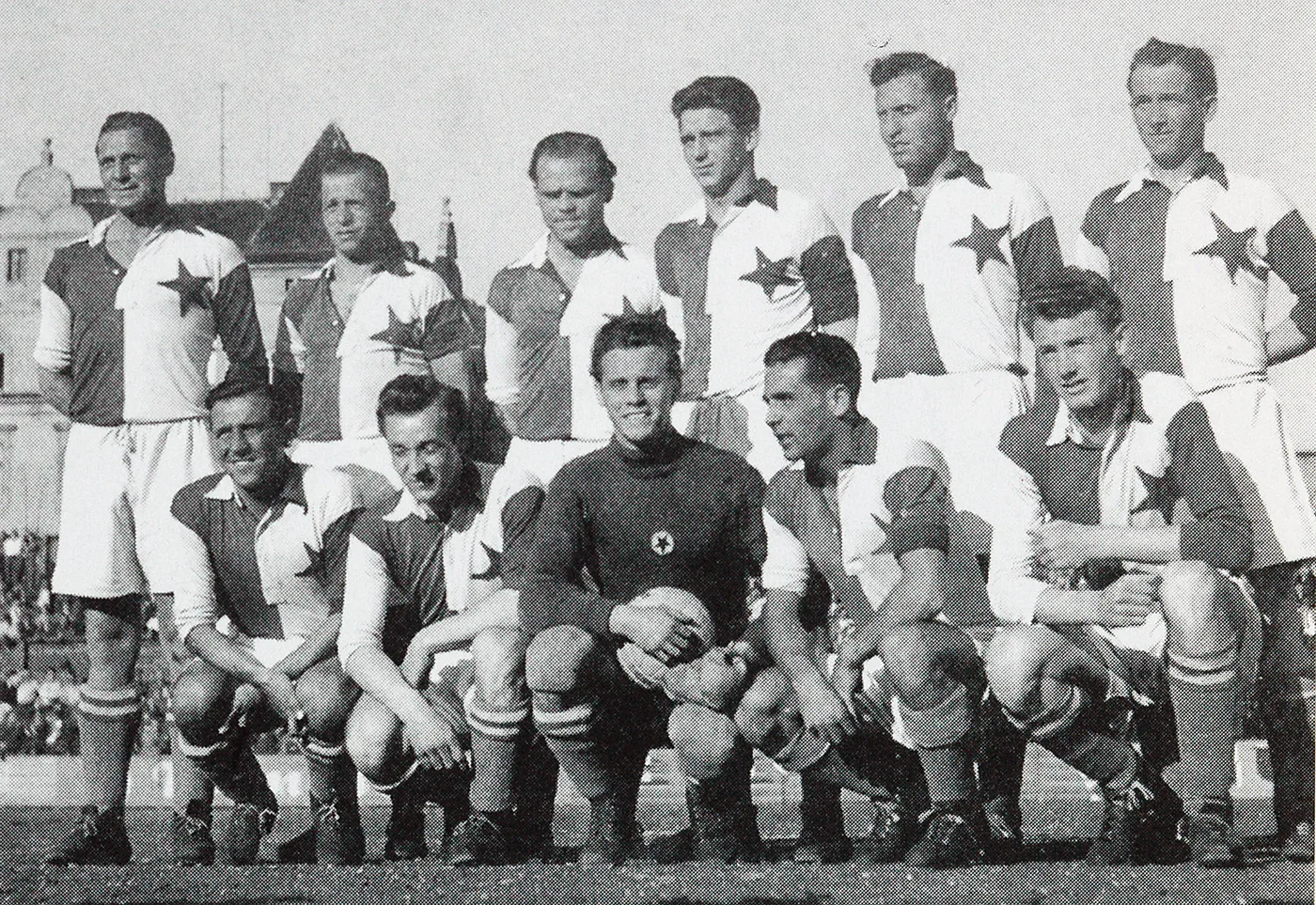
Why The World Stopped Watching Bican's obscurity was not an accident of talent, it was manufactured by history. When communists seized power in Czechoslovakia in 1948, Slavia Prague was stripped of its name and rebranded Dynamo Prague to fit the new regime's naming conventions, a small but symbolic erasure of the club identity Bican had made legendary. He refused to join the Communist Party, a decision that by his own later account cost him financially and professionally in a country now largely cut off from Western Europe's football media and markets. There was no television deal beaming Eastern Bloc league football to the rest of the continent, little surviving footage, and a Cold War divide that meant an entire generation of Western fans simply never saw him play. Those who did remembered a quiet, private man, uneasy with the fame his feet had earned him, whose reputation survived largely through teammates' recollections and the increasingly mythical retelling of his numbers rather than through the game film that immortalized his contemporaries elsewhere in Europe. He kept playing until 1955, retiring at 42 after one final scoring stretch back at Dynamo Prague, then moved into coaching, managing at Dynamo and elsewhere with modest success, a quiet second act for a man who had once been the most feared striker on the continent.
Rediscovering Football's Forgotten King Bican's name resurfaced in the wider football conversation almost by accident, dragged back into view every time Ronaldo, Messi or another modern great closed in on a career scoring milestone and statisticians went looking for historical comparisons. FIFA itself has referred to him as football's "master of marksmen." The Czech FA's 2022 intervention, timed precisely to Ronaldo's pursuit of an all-time record, showed how contested his legacy still is, and how much it still matters to the people keeping it alive. Ask who really owns football's goalscoring record and the honest answer is that it depends entirely on which definition you accept: official competitive matches only, all senior appearances, or every goal ever credited to him in any competition. Bican's case does not resolve neatly, and perhaps it should not. His real significance was never going to rest on whether the final number reads 805, 821, or somewhere past 1,000. It rests on the fact that a player could dominate an entire era of European football, break records that still stand today, and still come within a generation of vanishing from the sport's collective memory altogether. That, more than any single number, is Josef Bican's most remarkable record.